

Safety
Supporting Your Well-Being
Safety is always at the centre of our work.
Everyone deserves to feel safe. If you’re navigating an abusive relationship, safety can mean many things - from physical protection to emotional support. It can look like knowing who you can turn to, where you can go, and what resources are available to you - whether you’re choosing to stay, exploring your options, or thinking about leaving.
Below, you’ll find information to help you identify both personal and professional supports that are available. These are helpful starting points in building a safety plan that’s right for you.
We invite you to connect with us on our 24-hour support line at 604-467-9966 or to reach out to our counselling centre at 604-467-9939.
You’re not alone. We’re here when you need us.
What Is Abuse
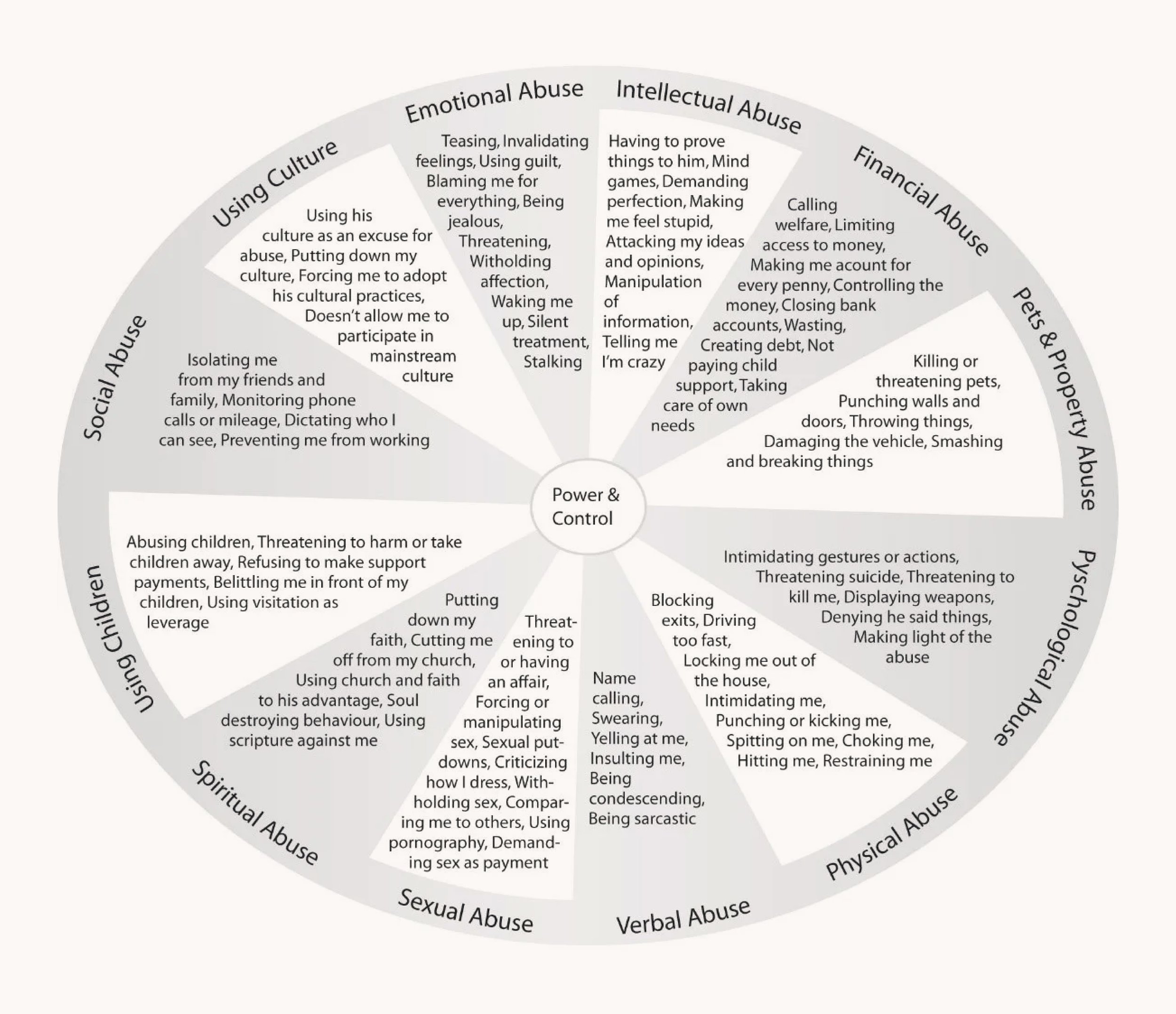
Abuse is a pattern of controlling behaviour used to gain and maintain power in a relationship by one partner over the other. The abuse often occurs gradually and may include the use of fear, intimidation, threats and violence. These behaviors are intentional and not the fault of the woman. Women do not choose abuse. They choose the earlier days of the relationship when they may have been swept off their feet by a seemingly charming partner. An abusive partner, however, turns out to be someone quite different than the person with whom they fell in love.
The graphics below demonstrate the cycle of abuse and how power and control issues are at the core of abusive behaviours.

Creating a Safety Plan
A good safety plan is personal to you, and it’s okay to start small. Below are a few gentle steps to help you get started.
-
Think about who in your life you trust to respect your privacy and support your safety. These are people who are not connected to the person causing harm, and who understand the importance of confidentiality.
Some examples might include:
A trusted friend or relative
Co-workers or supervisors
Neighbours
Counsellors or outreach workers
Police officers
School-based staff and supports
Phone-based crisis lines or support services
-
If you ever need to leave quickly, it can help to have a small bag prepared with essential items. When possible, consider storing these with someone from your support network.
Items you may want to include:
Identification and important documents (e.g. birth certificates, passports, custody or court orders, citizenship papers)
Money and/or credit cards
Medication
House or car keys
A few days’ worth of clothing for you and your children
Small valuables or comfort items
-
It’s helpful to have a few safe places in mind, especially in case you need to leave quickly and unexpectedly.
Safe options might include:
The home of someone in your support network
A shelter or transition house
A police station
A hotel or motel
A 24-hour store or coffee shop
-
There are services and programs in the community that can support your safety, healing, and next steps - whether you’re staying, planning to leave, or unsure.
Some examples include:
Counselling and outreach programs
Transition houses or safe homes
Family Justice services
Ministry of Children and Family Development
BC Housing or other housing support services
If you’d like support in building a safety plan or talking through your options, our team is here. You can call our 24-hour support line at 604-467-9966 or reach out to our counselling centre at 604-467-9939.
You don’t have to figure it all out on your own. We’re here when you’re ready.
-
Taking steps to secure your own finances can give you a sense of stability and confidence as you prepare to move forward. Even small actions now, like setting aside money or opening your own account, can make a big difference in covering your essential needs and supporting yourself and your children during this transition.
Some ways to start building financial independence include:
Opening your own bank account
Keeping money in a safe, accessible place (at home or with a trusted friend or family member)
Updating the account where your child tax benefits are deposited (your bank can help with this)
-
Creating a safer space for yourself at home can help you feel more secure and supported. There are a number of practical steps you can take, from simple changes to legal protections, to strengthen your safety:
Change locks on the doors
Install security cameras or doorbell cameras
Use motion-activated security lights
Ask a trusted neighbour to keep an eye out and call 911 if something seems wrong
Utilize Protection Orders, Conduct Orders, or police-issued No Contact Orders
If a Protection Order or other legal order is in place, you have the right to call 911 when it is breached. Reporting every breach, no matter how small, not only helps keep you safe but also creates a record that can support you in court or other legal proceedings.
British Columbia has a Protection Order Registry that all police departments can access to confirm a protection order within minutes. You can check to make sure your order is listed in the registry by calling VictimLink BC at 1-800-563-0808.

Additional Resources
BC211 provides a comprehensive database of resources available in the province of British Columbia. We invite you to access their database to find other services in the community to support you and your family.
Protecting Your Digital Trail
There are many ways to protect yourself when using the internet and social media. The safest way is to use computers or devices that your partner does not have access to.
As this is not always possible, we have compiled information to help you gain understanding of how you can protect yourself when using the internet.
Please note our “Safe Exit” button located at the top of our web page.
Deleting your Browser’s History
Use a private search page provided by your internet search provider whenever possible. This way, your browser will automatically discard information about the pages you visit or the information you’ve searched. Explore how to do this on the various internet browsers:

Is Someone You Know Being Abused?
Knowing the Warning Signs & What to Do Next
First, if someone is in immediate danger, call 911 or the emergency number in your community.
Never talk to anyone about abuse in front of their suspected abuser. Unless the person impacted specifically asks for it, never give them materials about domestic abuse or leave information through voice messages, texts or emails that might be discovered by their abuser.
Abuse thrives in secrecy, so speak up if you can do so safely. If the person impacted wants to talk, listen. If they don’t, simply let them know that you are concerned about their safety and that they do not deserve to be harmed. Let them know you are there to help and/or support them, and to connect them with professional support. If they decide to stay in the relationship, try not to judge them. Remember, leaving an abuser can be extremely dangerous. Sometimes, the most valuable thing you can offer an individual who is being abused is your care and respect.
Resources for Professionals
Always put your client’s safety first. Do not discuss domestic abuse and/or violence in front of the abuser. Those experiencing domestic abuse and violence need to be heard, respected and believed. Provide referrals and resources as your client permits and educate yourself as to the signs of abuse and the ways in which you can support your client to create safety. Below you will find resources you can use to support your client; either by helping them to develop a safety plan, or by educating yourself about abuse.
Safety Plan
Safety plans are important for the person who is planning to leave or to stay in the relationship. Completing a safety plan can support them in seeking out safety when things are escalating at home in order to exit the relationship.
Educate Yourself
Domestic violence can be difficult to see in a relationship. Abusers are often described as charming and use a variety of tactics to maintain power and control over their partners. Abusers manipulate family, friends, relatives, employers, and professionals in order to remain dominant.
Educating yourself about the red flags and impacts of abuse is a great place to start in supporting your client. Helpful resources: